PRP Hair Treatment in Hyderabad: How It Works, Who It Helps, and What ORA Does Differently
PRP (Platelet-Rich Plasma) is one of the most searched hair loss treatments in Hyderabad — and one of the most inconsistently performed. For a comparison with GFC, see GFC vs PRP: which is better for hair loss. The underlying science is sound. The clinical variability is wide. The difference between a PRP treatment that produces measurable results and one that produces nothing comes down to preparation protocol, platelet concentration, and whether the right patients are selected for it.
At ORA Skin & Hair Clinic, Kondapur, PRP is one of several evidence-based options in ORA's hair loss protocol — alongside GFC therapy, Exosome treatment, and medical management. This guide explains what PRP actually does, who benefits, and how ORA's approach differs from most clinics in Hyderabad.
What PRP Is — and What It Does to Hair Follicles
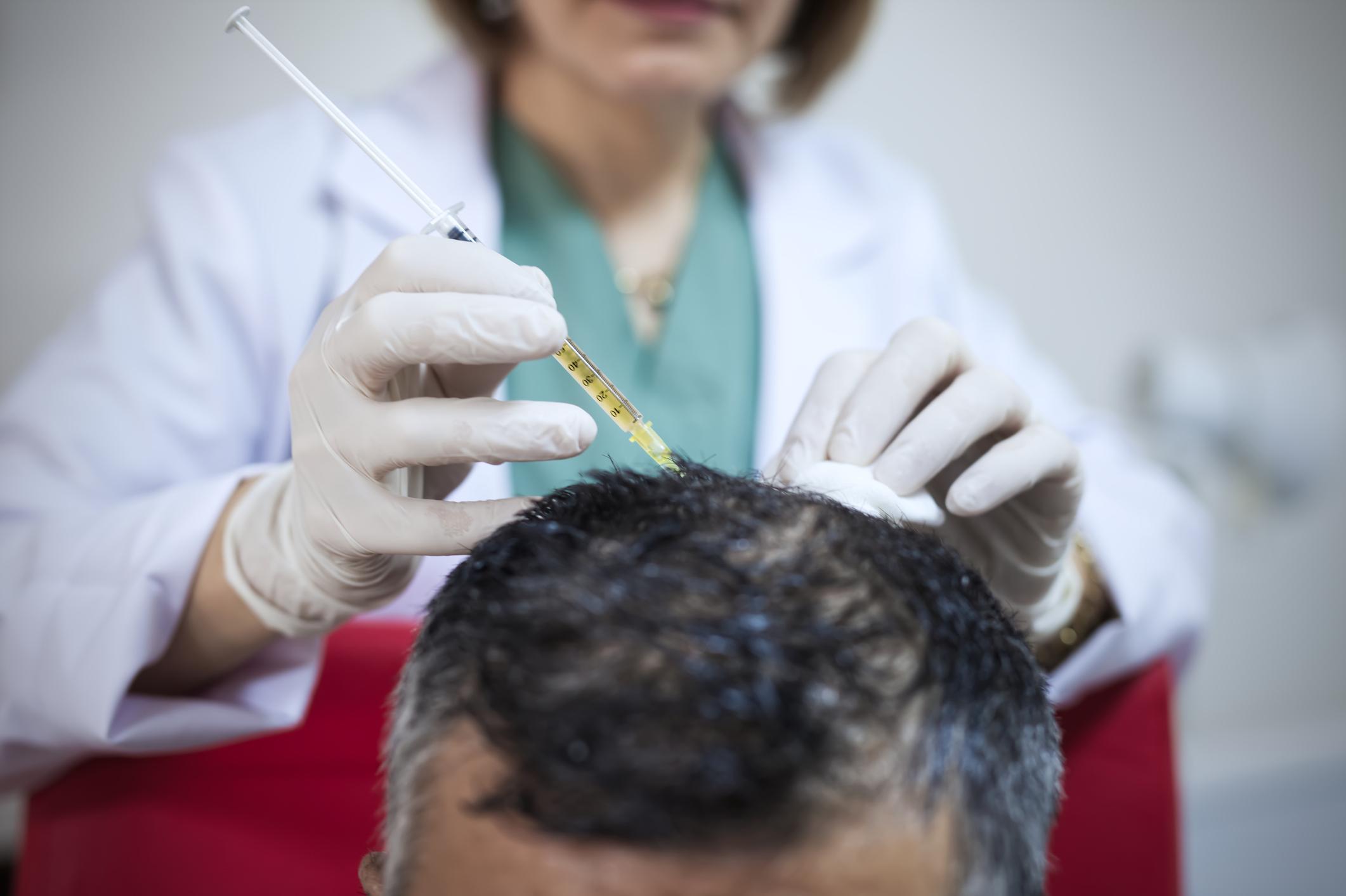
PRP is derived from the patient's own blood. Blood is drawn, then centrifuged to separate platelets from red blood cells. The resulting platelet-rich plasma — typically containing 3–5 times the normal platelet concentration — is injected into the scalp at the follicle level.
Platelets release growth factors including PDGF (Platelet-Derived Growth Factor), VEGF (Vascular Endothelial Growth Factor), EGF (Epidermal Growth Factor), and TGF-β. These growth factors stimulate follicular stem cells, improve scalp blood supply, and extend the anagen (growth) phase of the hair cycle. The mechanism is regenerative — PRP does not stop hair loss pharmacologically, it creates a more favourable follicular environment.
According to a 2022 meta-analysis in the Journal of the American Academy of Dermatology covering 19 randomised controlled trials, PRP produced statistically significant improvements in hair count and density in androgenetic alopecia (pattern hair loss) over 3–6 sessions, with the strongest evidence in male and female pattern hair loss in the early to moderate stages.
Who PRP Actually Helps
PRP has the strongest evidence for:
- Androgenetic alopecia (AGA) — male and female pattern hair loss, Norwood II–IV in men, Ludwig I–II in women. Early to moderate stages respond better than advanced.
- Telogen effluvium — diffuse shedding triggered by stress, nutritional deficiency, post-partum, or illness. PRP helps stabilise and restore the hair cycle once the trigger is managed.
- Post-hair transplant recovery — PRP applied to the recipient area post-transplant improves graft survival and accelerates regrowth. At ORA, Dr. Irfan Ahmed incorporates PRP into the post-transplant protocol where indicated.
PRP has limited evidence for alopecia areata (patchy hair loss) and no evidence for scarring alopecias. At ORA, the suitability of PRP for a patient's specific pattern and stage is assessed during the trichoscopy consultation — not assumed from a treatment menu.
PRP vs GFC: The Honest Comparison
Both PRP and GFC (Growth Factor Concentrate) are autologous blood-derived treatments. The key differences:
PRP contains whole platelet-rich plasma — platelets suspended in plasma. The growth factor concentration depends on the centrifugation protocol. Variability between clinics is high: a low-quality PRP preparation may have minimal growth factor concentration above baseline blood.
GFC takes the process further — platelets are activated to release growth factors, which are then concentrated into a small volume without plasma proteins. The result is a higher concentration of therapeutic growth factors in a smaller injection volume.
At ORA Skin & Hair Clinic in Kondapur, our dermatologist explains the distinction honestly. For most hair loss presentations, GFC produces more consistent results than standard PRP — which is why GFC is ORA's first-line recommendation for most cases. PRP is appropriate when GFC is not available or when the patient's platelet quality makes concentration to GFC less effective. The decision is made clinically, not based on price or availability.
ORA's PRP Hair Treatment Protocol
- Trichoscopy assessment: Before any treatment is recommended, Dr. Spandana P conducts a trichoscopy — digital scalp examination under 20–70× magnification — to assess follicle density, miniaturisation ratio, and pattern. This determines whether PRP (or GFC) is appropriate and what results are realistic.
- Blood panel: At ORA, we check serum ferritin, thyroid function, and vitamin D before any hair treatment. PRP will not produce lasting results if ferritin is below 40 ng/mL or if thyroid function is abnormal. These are treated concurrently.
- Blood draw and preparation: Blood is drawn in-clinic and centrifuged using a validated protocol. The PRP is prepared under sterile conditions.
- Scalp preparation: A topical anaesthetic is applied 30 minutes before the session. The injection technique uses a fine-gauge needle with a scalp massage protocol post-injection to distribute the growth factors.
- Session schedule: ORA's standard PRP protocol is 4 sessions at monthly intervals, with a trichoscopy review after the protocol to assess response.
How Many Sessions Does PRP Require?
ORA's standard protocol is 4 monthly sessions, followed by a trichoscopy review at 3 months post-treatment. Most patients see a reduction in shedding by session 2. Measurable density improvement is typically visible at the 3-month review. Maintenance sessions at 4–6 monthly intervals are recommended for androgenetic alopecia, as the underlying condition is progressive.
At ORA, we do not sell a fixed package without assessment. The number of sessions appropriate for you is determined by your trichoscopy findings, not by a price list.
If You're Comparing PRP Clinics in Hyderabad — What to Ask
- What centrifugation protocol do you use? Single-spin PRP and double-spin PRP produce different platelet concentrations. The answer should be specific.
- Does a doctor assess my scalp before recommending PRP? At ORA: yes, trichoscopy by Dr. Spandana P before any treatment is recommended.
- Will you check my ferritin and thyroid before starting? Any clinic starting PRP without checking these is treating a symptom, not the cause.
- What results should I expect, over how many sessions? The answer should include a trichoscopy review date and a realistic improvement percentage — not a vague "you will see improvement."
ORA Skin & Hair Clinics, Kondapur, Hyderabad — Avalon Court, Botanical Garden Road, open 7 days 10 AM to 8 PM. Patients travel from Gachibowli, Madhapur, HITEC City, Miyapur and Manikonda for diagnosis-first hair treatment. Rated 4.9★ on Google by 1,000+ patients. Book at oraskinclinics.com or WhatsApp +91 99893 61555.
Frequently Asked Questions About PRP in Hyderabad
How painful is PRP hair treatment?
ORA applies a topical anaesthetic cream 30 minutes before the session. The injections are delivered with a fine-gauge needle and are typically described as mild discomfort rather than pain. Most patients resume normal activity immediately after the session. There is no downtime — mild scalp tenderness for 24–48 hours is normal.
Is PRP permanent for hair loss?
No — PRP is not a permanent cure for androgenetic alopecia (pattern hair loss), which is a genetic, progressive condition. PRP improves follicular health and slows progression. Maintenance sessions every 4–6 months are recommended for sustained benefit. For patients with telogen effluvium (shedding triggered by a reversible cause), results can be more lasting once the trigger is resolved.
Can PRP be combined with other hair treatments?
Yes. At ORA, PRP is often combined with medical management (minoxidil, finasteride where appropriate) and nutritional correction. Post-hair transplant PRP is a standard part of ORA's transplant protocol. PRP and GFC are generally not combined in the same session — your dermatologist will recommend the most appropriate single treatment based on your trichoscopy assessment.
What is the cost of PRP hair treatment at ORA Hyderabad?
PRP session cost at ORA depends on the treatment area. Contact ORA at +91 99893 61555 or book a trichoscopy consultation at oraskinclinics.com to receive a written treatment plan with costs. No treatment cost is provided without a clinical assessment — because the right treatment for you may be GFC, PRP, Exosomes, or a combination, and the protocol is determined by your diagnosis.
How is PRP different from GFC at ORA?
Both use the patient's own blood. GFC (Growth Factor Concentrate) goes one step further — platelets are activated to release growth factors, which are concentrated at a higher level than standard PRP. At ORA, GFC is the first-line recommendation for most hair loss presentations because the growth factor concentration is more consistent. PRP is offered where GFC is clinically less appropriate. Your dermatologist explains both options at your consultation.
Book Your Free Skin / Hair Analysis
A thorough assessment — complimentary. No obligation. No pressure. Just answers. Up to 25% Off on your first visit session.
Related Articles
Female Hair Loss in Hyderabad: Why It's Different, What Causes It, and What Actually Works
9 min
FUT vs FUE vs DHI Hair Transplant in Hyderabad — Which Technique Is Right for You?
9 min read
Acne Treatment in Hyderabad: How Humidity, Diet and Indian Skin Affect Your Breakouts
8 min read