By Dr. Spandana P — M.B.B.S, M.D. Dermatology, Venereology & Leprology | ORA Skin & Hair Clinics, Kondapur, Hyderabad | Published June 2026
Hyderabad has a humidity problem that most dermatology content does not acknowledge. At 60–80% relative humidity for most of the year, the city's climate creates a skin microenvironment that is almost perfectly designed to worsen acne — particularly in Indian skin types. I see this pattern so consistently at my Kondapur clinic that I now include a specific humidity-related skin audit in every acne consultation. If you live in Hyderabad and your acne is not responding to standard treatments, the city's climate is almost certainly a contributing factor.
Why Hyderabad's Humidity Specifically Worsens Acne
Humidity affects acne through three distinct mechanisms:
- Increased sebum production: High humidity disrupts the normal evaporation of moisture from the skin surface, creating a paradoxical signal: the skin "senses" dryness at the cellular level and compensates by increasing sebum output. More sebum means more material to clog pores.
- Enhanced bacterial colonisation: Cutibacterium acnes — the bacterium central to inflammatory acne — thrives in warm, humid environments. Hyderabad's combination of 30–35°C temperatures and high humidity creates near-optimal growth conditions on the skin surface.
- Compromised skin barrier: Chronic high humidity softens the stratum corneum (the skin's outer barrier layer), making it more permeable to irritants, bacteria, and comedogenic ingredients from skincare products. This explains why many patients find that moisturisers and sunscreens they can use without problems in cooler cities cause breakouts in Hyderabad.
According to a 2022 study in the Indian Journal of Dermatology, patients in high-pollution, high-humidity urban environments showed 40% higher rates of inflammatory acne lesions compared to patients in lower-humidity regions of India, independent of diet and hormonal factors. This differential is consistent with what I observe clinically at ORA.
Hyderabad-Specific Acne Triggers I Assess at ORA
In addition to standard acne triggers (hormones, diet, genetics), I specifically evaluate these Hyderabad-environmental factors in every acne patient:
- Water source: Hyderabad municipal supply and building tanks have TDS (total dissolved solids) of 300–500 ppm in many areas — water classified as "hard." Washing your face with hard water disrupts skin pH and deposits calcium and magnesium that interfere with the skin's natural lipid barrier, worsening comedonal acne.
- Skincare layering: Most patients layer multiple oil-based products — moisturiser, sunscreen, primer, foundation — all of which occlusion pores more severely in humid conditions than in dry climates. A single non-comedogenic, gel-based SPF is often sufficient (and dramatically better for acne patients) in Hyderabad's conditions.
- Air conditioning–outdoors cycle: Repeatedly moving between air-conditioned offices and outdoor humidity stresses the skin barrier and creates conditions for bacterial overgrowth.
- Dietary patterns: High-glycaemic South Indian dietary staples (white rice, idli, dosa, maida-based snacks) spike insulin and IGF-1, which directly stimulates sebum production. A 2021 meta-analysis in the Journal of the American Academy of Dermatology confirmed the high-GI diet–acne link with strong epidemiological and clinical evidence.
What Acne Is — and Why Type Matters
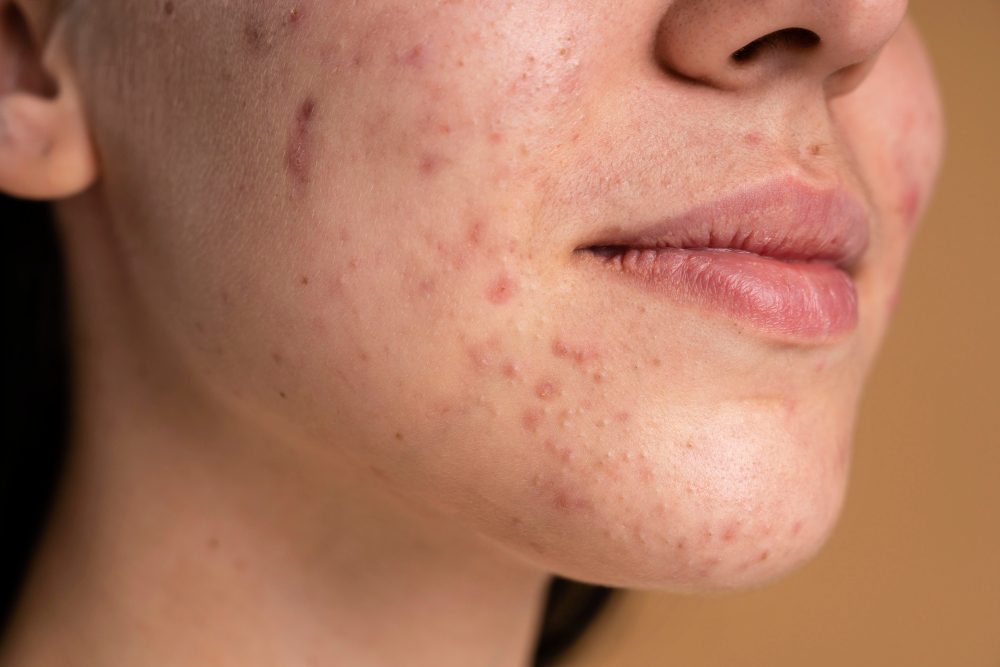
Acne vulgaris is a chronic inflammatory disorder of the pilosebaceous unit — the hair follicle and sebaceous gland. It occurs when sebum, dead skin cells, and C. acnes bacteria combine to plug and inflame the follicle. The type of lesion produced depends on whether the plug remains closed (whitehead), opens (blackhead), or triggers an inflammatory response (papule, pustule, nodule, or cyst). Treatment must be matched to the lesion type — applying an anti-inflammatory treatment to non-inflammatory comedones will have no effect.
Clinic Treatments for Humidity-Driven Acne in Hyderabad
Salicylic Acid Peels — First-Line Treatment
Salicylic acid is lipophilic — it penetrates oil-filled pores more effectively than water-based acids. At concentrations of 20–30%, salicylic acid peels dissolve sebum plugs, reduce C. acnes colonisation, and decrease sebaceous gland activity. For humid-climate acne, this is my preferred first-line treatment. A series of 6 sessions spaced 2–3 weeks apart produces significant reduction in comedonal and mild inflammatory lesions.
According to research published in the Journal of the American Academy of Dermatology (2022), patients completing 6 salicylic acid peel sessions showed 65% reduction in inflammatory lesion count at 12 weeks compared to baseline.
Q-Switch Laser for Inflammatory Acne and PIH
For patients with predominantly inflammatory acne (papules and pustules) or significant post-acne PIH, Q-Switch laser reduces sebaceous gland size, kills C. acnes via thermal effect, and targets melanin deposits from post-inflammatory marks simultaneously. At ORA, I combine Q-Switch with salicylic acid peels for moderate-to-severe acne — treating active lesions and preventing PIH in a combined protocol.
Home Care Protocol for Hyderabad's Climate
Clinic treatment alone is insufficient in Hyderabad without a climate-appropriate home care protocol. My standard acne home care prescription for Hyderabad patients:
- Cleanser: Gel-based, pH-balanced (pH 5–5.5) face wash; use filtered or bottled water if your tap water is high-TDS
- Moisturiser: Oil-free, non-comedogenic gel or gel-cream only — not lotion or cream in humid months
- SPF: Gel or aqua-fluid SPF 50+ PA+++ — no oil-in-water creamy formulations
- Prescription topicals: Clindamycin + benzoyl peroxide combination for inflammatory acne; adapalene or tretinoin for comedonal acne
- Dietary: Reduce white rice intake at dinner; replace 30% of high-GI carbohydrates with protein or complex carbs during the treatment period
ORA's Acne Treatment Protocol — Step by Step
- Full acne audit: Lesion classification, trigger identification (humidity factors, diet, hormones, water quality), current skincare and medication review
- Active treatment phase (months 1–3): Clinic peel series + prescription topicals + climate-specific home care protocol
- PIH phase (months 3–5): Q-Switch laser sessions for residual post-acne marks once active acne is controlled
- Maintenance: Quarterly salicylic acid peels through Hyderabad's humid season (June–September) + ongoing prescription home care
Why Patients from Gachibowli, Madhapur, and HITEC City Choose ORA for Acne
ORA Skin & Hair Clinics is located on Botanical Garden Road, Kondapur — rated 4.9★ on Google by 500+ patients. Patients from Gachibowli, Madhapur, HITEC City, and Manikonda choose ORA because I include a climate and water quality audit in every acne consultation — something no standard protocol includes. At ORA, we address what is actually driving your acne in Hyderabad specifically, not what drives acne in a generic clinical population. ORA is one of the very few clinics in Kondapur that provides a Hyderabad-specific skincare prescription alongside clinic treatment — including recommendations for hard water management and humidity-appropriate product selection.
If You're Comparing Acne Clinics in Hyderabad
- "Do you assess humidity and hard water as acne triggers specific to Hyderabad?"
- "Will you review my skincare routine and identify comedogenic products?"
- "Do you provide a written home care prescription alongside clinic treatment?"
- "Is the treatment protocol performed or supervised by a dermatologist?"
Frequently Asked Questions
Does switching to filtered water help acne in Hyderabad?
For some patients, yes — particularly those with predominantly comedonal acne and high-TDS tap water. I recommend trying face washing with filtered or bottled water for 4 weeks as a diagnostic test. If comedonal count reduces significantly, hard water is a meaningful trigger for you and a shower filter or facial water filter is worth considering long-term.
Why does my acne worsen in June–August (monsoon) in Hyderabad?
The monsoon months bring the highest humidity of the year (80–90% in some weeks). This peak humidity corresponds with the maximum sebum overproduction, maximum C. acnes colonisation conditions, and maximum skin barrier disruption. Many patients experience their worst acne flares during monsoon. I recommend intensifying clinic treatment during this window and switching to the most minimal, non-comedogenic skincare possible.
Is adult acne in Hyderabad more common than elsewhere?
I see disproportionately high rates of adult acne (post-25) in Hyderabad's technology sector workforce — driven by chronic stress, sedentary indoor work, high-GI canteen food, and the city's climate. This is anecdotally consistent with what I observe clinically but mirrors the broader trend documented in the Indian Journal of Dermatology (2023) showing adult acne prevalence rising across India's urban IT workforce.
Can I use the same acne products in Hyderabad that worked elsewhere?
Not always. Products that work in lower-humidity cities (Bangalore, Delhi in winter) may clog pores in Hyderabad's conditions, particularly if they contain heavier emollients or oils. When patients relocate to Hyderabad and their previously controlled acne worsens, climate adaptation of the skincare routine is usually the first intervention.
Book Your Acne Consultation at ORA, Kondapur
ORA Skin & Hair Clinics — 3rd Floor, Avalon Court, Camelot Layout, Botanical Garden Road, Kondapur, Hyderabad 500084.
Rated 4.9★ on Google by 500+ patients.
Book online or WhatsApp +91 99893 61555.
Book Your Free Skin / Hair Analysis
A thorough assessment worth ₹1,500 — completely free. No obligation. No pressure. Just answers. Up to 25% Off on your first visit session.
Dr. Spandana P
Dr. Spandana P holds an MD in Dermatology, Venereology & Leprology and is the lead dermatologist at ORA Skin & Hair Clinics, Kondapur. She specialises in evidence-based acne protocols calibrated for Indian skin tones and Hyderabad's climate.
Consult with Experts →Related Articles
Dark Circles Treatment in Hyderabad: Causes, Clinical Options and What Actually Works
8 min read
Melasma vs Hyperpigmentation in Hyderabad: How to Tell the Difference and Treat Each
9 min read
Acne Treatment in Hyderabad: What Actually Works (2026 Complete Guide)
8 min read