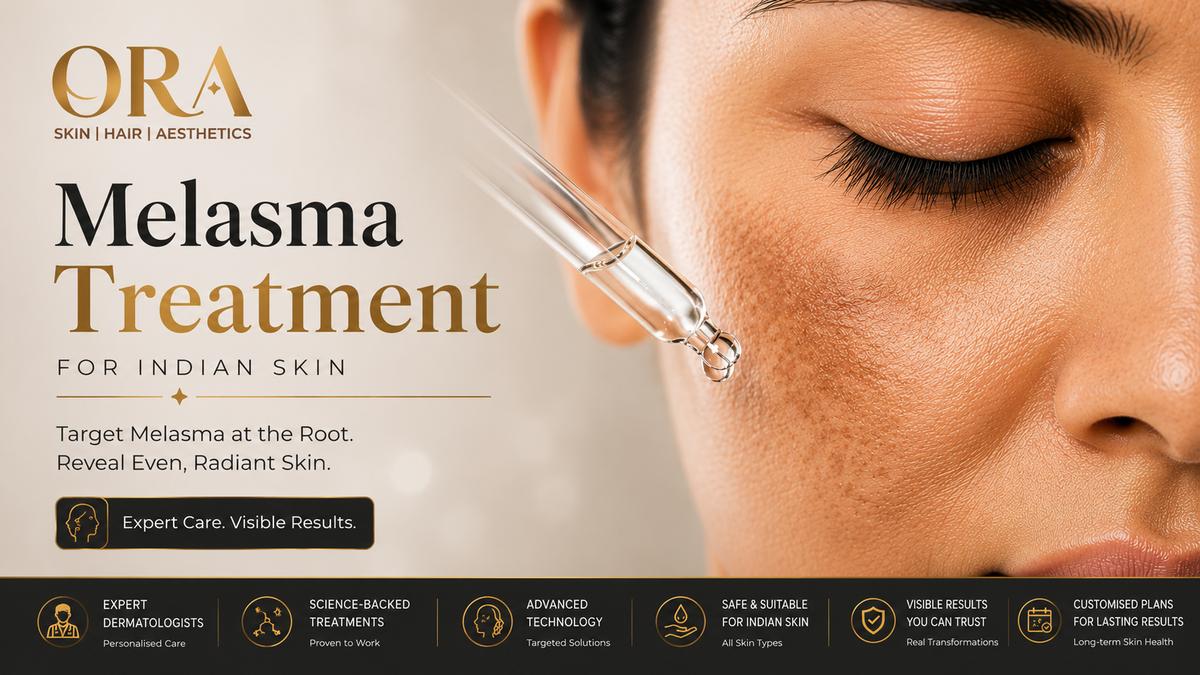
By Dr. Spandana P — M.D. Dermatology, Venereology & Leprology | ORA Skin & Hair Clinics, Kondapur | July 2026
Melasma is the condition I get asked about most frequently at our skin clinic in Kondapur — and the one where I see the most money wasted on the wrong treatments. I've had patients spend ₹40,000 on brightening facials at salons over 18 months, with their melasma unchanged or worse. I've had patients told a single laser session would clear it, only to have it return darker within three months.
I'm going to tell you exactly what works, what doesn't, and why the standard advice fails on Indian skin specifically — because treating melasma on Fitzpatrick III–V skin is genuinely different from what you read in international guides.
What Melasma Actually Is (And Why It Keeps Coming Back)
Melasma is a chronic pigmentation condition caused by overactive melanocytes — the cells that produce skin colour — being triggered by UV light, oestrogen, or heat. On Indian skin, melanocytes are more numerous and more reactive than on lighter skin types. They respond more aggressively to UV exposure, and once triggered, they're harder to switch off.
This is why melasma on Indian skin has two characteristics that make it harder to treat than the international literature suggests: it often extends into the dermis (the deeper skin layer, not just the surface), and it recurs rapidly when UV exposure continues. I tell every patient: I can clear your melasma significantly — but without daily SPF 50+, it will come back. That's not a flaw in the treatment. That's the nature of the condition.
Why Hyderabad Makes Melasma Worse
Two Hyderabad-specific factors that most dermatology content ignores:
UV index 9–11 from April to September: Hyderabad ranks among the highest UV-intensity cities in India during this period. A UV index of 10 means skin damage begins in under 15 minutes of unprotected exposure. For someone with active melasma, 15 minutes in the Kondapur mid-afternoon sun without SPF 50 is enough to undo a week of topical treatment progress.
AC-to-sun cycling: Working in air-conditioned offices and then stepping into 38°C direct sun 3–4 times a day creates a thermal stress cycle on melanocytes that we see specifically in Hyderabad's IT workforce. Heat — not just UV — triggers melanin production. The indoor-outdoor temperature swing is an underappreciated melasma driver in Hyderabad that isn't relevant in most cities.
The Protocol That Actually Works — ORA's Approach
Before anything else: we don't start treatment without knowing the pigmentation depth. A Wood's Lamp and dermoscopic analysis takes 10 minutes and tells us whether the melanin is in the epidermis (treatable faster), dermis (requires laser), or mixed (both). This matters because if you apply depigmenting cream to dermal melasma and expect it to clear in 8 weeks, you will be disappointed — the cream can't reach that deep.
Here's the protocol that produces results at ORA:
Step 1 — Sunscreen (Non-Negotiable Foundation)
SPF 50+ PA++++ physical sunscreen applied 20 minutes before going outdoors. Reapplied every 2 hours during outdoor exposure. For Indian skin with melasma, I specifically recommend zinc oxide or titanium dioxide-based sunscreens — not chemical filters. Chemical UV filters absorb light and convert it to heat. That heat stimulates melanocytes. Physical filters reflect UV without generating heat, which is why they produce better outcomes for melasma on Indian skin.
No other step in this protocol works reliably without this one. I won't pretend otherwise. A Q-Switch laser session is ₹X. Sunscreen is ₹300. The sunscreen matters more.
Step 2 — Prescription Depigmenting Agents (The Right Ones)
The evidence-based first-line prescription for melasma is the triple combination: hydroquinone 4% + tretinoin 0.05% + mild corticosteroid. Each component does a specific job — hydroquinone inhibits melanin production, tretinoin speeds up shedding of pigmented cells, the corticosteroid manages the irritation from the other two. Used correctly for 8–12 weeks, this combination produces measurable improvement in most patients with epidermal melasma.
The prescription I've been using more frequently in the past two years: oral tranexamic acid at 250 mg twice daily. This works through a completely different mechanism — it blocks the signalling pathway that UV and oestrogen use to trigger melanocytes. It doesn't irritate the skin, doesn't cause the initial purging that tretinoin does, and is particularly effective for the hormonally-driven melasma that's very common in women in Hyderabad who are on oral contraceptives. It's not a substitute for sunscreen — nothing is — but as a treatment it outperforms hydroquinone for many of my patients with hormonal triggers.
Step 3 — Q-Switch Nd:YAG Laser (For Stubborn or Deep Melasma)
The Q-Switch Nd:YAG laser at 1064 nm is the safest laser for melasma on Indian skin. I want to be specific about why: 1064 nm has lower melanin absorption than 532 nm or 755 nm wavelengths, which means it fragments pigment without triggering the surrounding melanocytes. At higher-absorption wavelengths, the heat response can cause post-inflammatory hyperpigmentation (PIH) — a darkening that's worse than the original melasma. I've seen this happen when patients come to us after aggressive laser treatment elsewhere.
At ORA, we use a low-fluence multi-pass protocol rather than high-energy single-pass — multiple lighter passes over the skin rather than one powerful pass. This is the approach supported by published protocols for Indian skin (Kauvar 2012; published in Dermatologic Surgery). It produces 60–70% improvement over 6–8 sessions with significantly lower PIH risk than high-fluence approaches.
One important note: the Q-Switch settings I use on my patients are not the settings listed in international device manuals. Those are calibrated for Fitzpatrick I–II skin. Using them on Indian skin without adjustment increases PIH risk substantially. This is a technical detail that matters enormously in practice — and it's something worth asking any clinic about before you consent to treatment. 👉 ORA melasma treatment protocol →
Step 4 — Chemical Peels as Adjunct (Carefully)
For epidermal melasma, superficial glycolic acid or mandelic acid peels can accelerate results when used alongside topical agents. Mandelic acid (large molecule, slow penetration) has a better safety profile for Indian skin than glycolic at equivalent percentages — it achieves the same epidermal turnover effect with lower irritation and PIH risk. I typically start peels only after 3–4 weeks of topical priming, and never at full strength on the first session.
Kojic acid peels work by a different mechanism — they inhibit tyrosinase directly, the enzyme that makes melanin — and are useful specifically for mixed-type melasma where you're trying to address both layers simultaneously. We combine kojic peels with the Q-Switch protocol for these cases.
Step 5 — Maintenance (The Part Most Patients Skip)
Clearing melasma is the first battle. Keeping it clear is the ongoing one. Without a maintenance protocol, recurrence rates exceed 80% within 12 months for Hyderabad patients who continue to have UV exposure. Our maintenance plan: retinoid cream 2–3 nights per week (keeps cell turnover elevated so pigmented cells shed before they accumulate), topical tranexamic acid, and one annual Q-Switch refresher session. This is what keeps patients I treated 2–3 years ago still looking clear today.
What Doesn't Work — And Why
Vitamin C serums as melasma treatment: Vitamin C is an antioxidant with a mild melanin-inhibiting effect. It's a good addition to a complete protocol. It is not a treatment for melasma on its own. I have patients who have used Vitamin C serums faithfully for 2 years with no meaningful change in their melasma. They weren't wrong to use it — they were wrong to use it alone.
Brightening facials at salons: These are not medical treatments. The active concentrations in salon-grade products are too low to reach dermal melanin, and the staff are not trained to identify mixed-type vs epidermal melasma. Money spent here is not money wasted — they feel good — but don't confuse them with treatment.
Lemon juice, raw turmeric, tomato rubbing: Lemon juice is photosensitising — it makes skin more reactive to UV light. Applying it and then going outside in Hyderabad's conditions can worsen melasma. Turmeric has mild anti-inflammatory properties but there's no meaningful clinical evidence for it as a melasma treatment. Tomato rubbing does nothing clinically relevant to melanin production. I'm not saying these are harmful (lemon juice aside). I'm saying they are not treatments, and the months spent on them are months your melasma could have started clearing.
IPL (Intense Pulsed Light) for Indian skin: IPL uses a broad-spectrum light that targets multiple chromophores. On lighter skin, this is manageable. On Indian skin, the thermal response to IPL is less predictable, PIH risk is real, and several published case reports document worsening of melasma post-IPL in Fitzpatrick IV–V patients. I don't use IPL for melasma on Indian skin, and I'd encourage caution if a clinic recommends it without discussing this risk.
If You're Comparing Clinics in Hyderabad for Melasma Treatment
Before booking anywhere, ask the clinic three questions:
- "Do you do a Wood's Lamp analysis before starting laser treatment?" — This identifies whether melasma is epidermal, dermal, or mixed. Without this, the treatment plan is a guess. A dermal-dominant melasma treated with topicals alone for 3 months is 3 months wasted.
- "What Q-Switch fluence do you use for Fitzpatrick IV skin?" — If the answer is the device's default setting or a blank stare, walk away. The specific fluence for Indian skin is lower than the standard setting. This is what separates a skilled operator from someone who learned from the device manual.
- "What is your maintenance protocol after the course finishes?" — If there is no answer beyond "come back if it comes back," there is no maintenance protocol. Melasma requires ongoing management, not a one-and-done treatment.
At ORA: yes to all three — and we see patients specifically from HITEC City, Gachibowli, Madhapur, and Kondapur who travel here because they couldn't get a clear diagnosis elsewhere. Wood's Lamp analysis before every first consultation. Q-Switch parameters calibrated to your specific Fitzpatrick type by Dr. Spandana P directly. Written maintenance protocol provided at end of course.
We're rated 4.9★ on Google by clients from Gachibowli, Madhapur, HITEC City, Jubilee Hills, and across Hyderabad — including many who came after spending months and money elsewhere without results. That's not a marketing statement. Read the reviews and you'll see it's a pattern. 👉 ORA melasma treatment — read more →
Frequently Asked Questions
How many sessions does it take to clear melasma at ORA?
Epidermal melasma with good sunscreen compliance typically shows 50–70% improvement in 6 Q-Switch sessions over 4–5 months. Mixed-type melasma (epidermal + dermal) takes longer — 8–10 sessions with a combined topical and laser approach. I won't promise a specific session count until I've done the Wood's Lamp and dermoscopy assessment, because the pigmentation depth makes all the difference. What I can say: most patients see meaningful visible improvement by session 4.
Is melasma treatment safe during pregnancy?
No. Hydroquinone, tretinoin, and most prescription depigmenting agents are contraindicated in pregnancy and breastfeeding. Q-Switch laser is also not recommended during pregnancy. The safe options during pregnancy are: medical-grade SPF 50+ sunscreen (this is the most important thing you can do), azelaic acid (which is safe in pregnancy and has mild brightening properties), and patience. Most pregnancy-related melasma — chloasma — improves significantly after delivery and completion of breastfeeding, after which full treatment can begin.
My melasma came back after a previous laser treatment at another clinic. Can it be treated again?
Yes, in most cases. Recurrence after laser is common and usually means one of three things: the post-treatment sunscreen protocol wasn't maintained, the underlying hormonal trigger (often OCP use) wasn't addressed, or the treatment parameters weren't appropriate for the skin type and caused a rebound. We frequently treat patients who've had prior laser treatment elsewhere. The first step is a fresh diagnostic assessment — we don't assume the previous protocol was correct.
How much does melasma treatment cost in Hyderabad?
Costs vary by what the assessment finds — a simple epidermal case treated with topicals alone costs significantly less than a mixed-type case requiring a full Q-Switch course. New clients at ORA receive a up to 40% off their first visit, which includes the diagnostic consultation, Wood's Lamp, and dermoscopy. We'll give you a transparent cost breakdown before any treatment begins — no surprises. 👉 Treatment costs at ORA →
Is there a dermatologist I can actually speak to at ORA, or does a consultant manage my case?
Every consultation and every procedure at ORA is conducted by Dr. Spandana P (M.B.B.S, M.D. Dermatology, Venereology & Leprology) directly. There are no junior consultants, no technician-managed laser sessions. If you're trusting someone to run a laser on your face, it should be a board-certified dermatologist who knows what to do if something unexpected happens. That's our standard, not our selling point.
ORA Skin & Hair Clinics | 3rd Floor, Avalon Court, Camelot Layout, Botanical Garden Road, Kondapur, Hyderabad 500084 | Mon–Sun 9 AM–8 PM | Rated 4.9★ on Google | Book free consultation → | Up to 40% off first visit
Book Your Free Skin / Hair Analysis
A thorough assessment worth ₹1,500 — completely free. No obligation. No pressure. Just answers. Up to 40% Off on your first visit session.
Dr. Spandana P
Dr. Spandana P is a board-certified dermatologist (M.B.B.S, M.D. DVL) at ORA Skin & Hair Clinics, Kondapur. She specialises in trichology, melasma, and advanced laser treatments for Indian skin types.
Consult with Experts →Related Articles
Acne Treatment in Hyderabad: How Humidity, Diet and Indian Skin Affect Your Breakouts
8 min read
Dark Circles Treatment in Hyderabad: Causes, Clinical Options and What Actually Works
8 min read
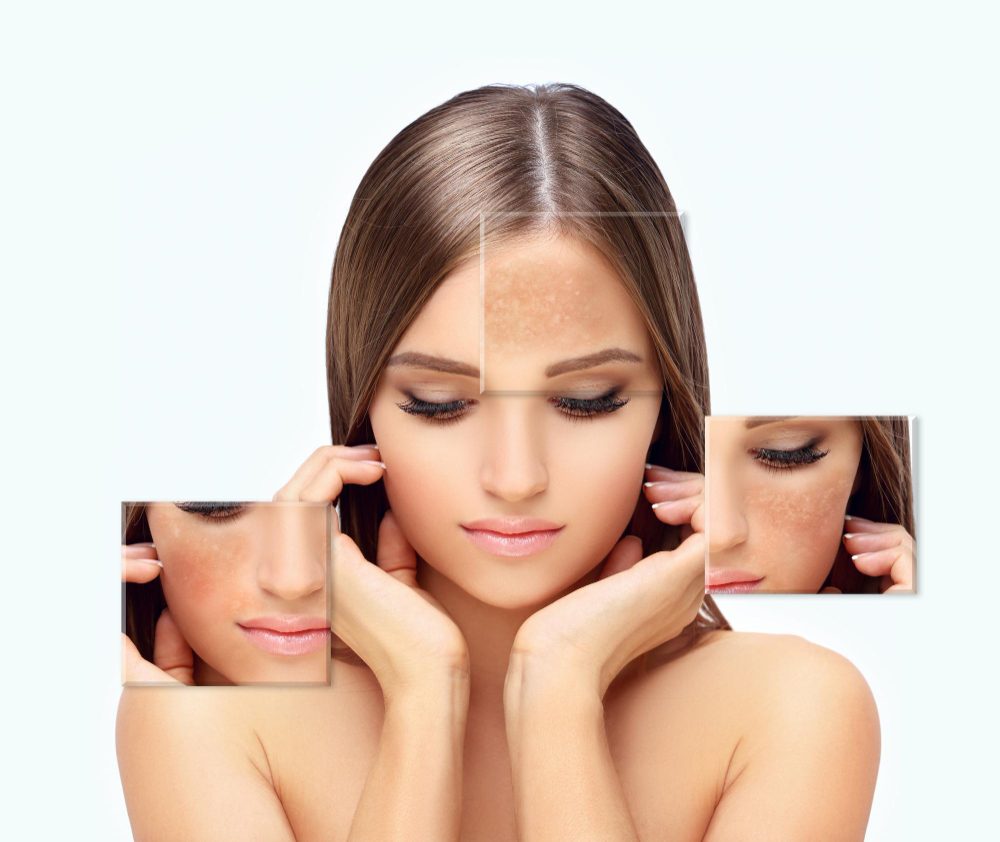
Melasma vs Hyperpigmentation in Hyderabad: How to Tell the Difference and Treat Each
9 min read