By Dr. Spandana P — M.B.B.S, M.D. Dermatology, Venereology & Leprology | ORA Skin & Hair Clinics, Kondapur | July 2026
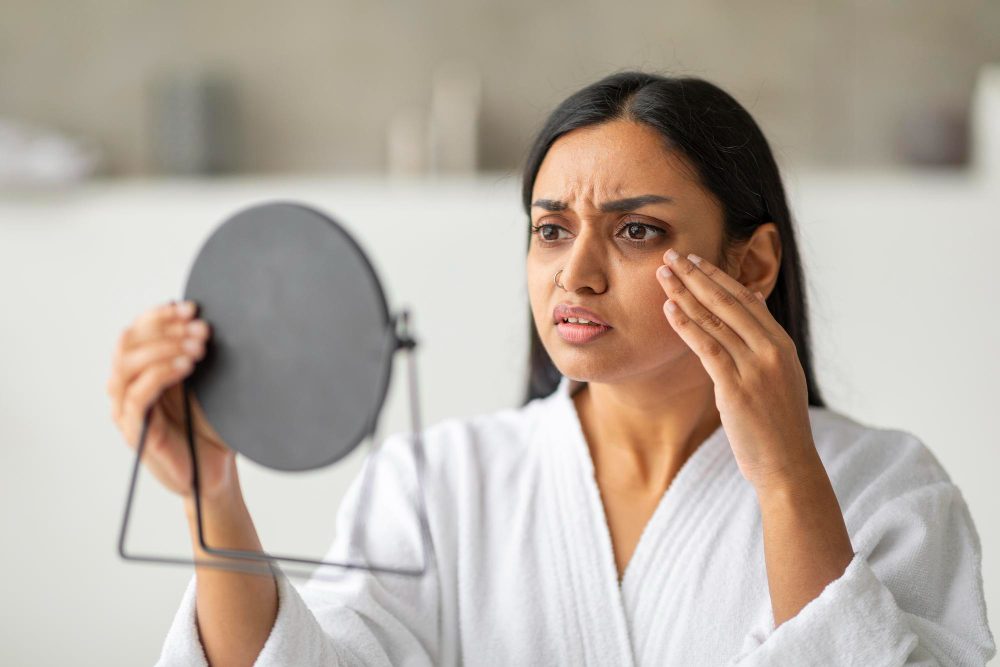
When a patient sits down and says "I have dark circles," the first thing I do is ask them what colour they are. Brown? Purple? Is the area hollow, or is it actually dark skin? Most people find this question strange. They've been buying eye creams for years and nobody has ever asked them this. The answer changes everything — because "dark circles" is actually three completely different conditions that look similar but have different causes and require different treatments.
Here's what I tell every dark circle patient before we talk about any treatment at ORA.
The 3 Types of Dark Circles — Why This Is the Diagnosis That Matters
Type 1: Pigmentary (Brown Dark Circles)
Pigmentary dark circles are caused by excess melanin under the eye — periorbital hyperpigmentation. The skin appears genuinely darker, usually brown or dark brown, and is visible even in good lighting. Common causes: sun exposure (the under-eye area is highly photosensitive), genetics (particularly prevalent in South Asian populations where melanocytes are more numerous), chronic eye rubbing, and contact dermatitis from makeup or skincare products.
A 2022 study in the Indian Journal of Dermatology estimated that periorbital hyperpigmentation affects approximately 16% of the adult Indian population — significantly higher than in Western populations — with Hyderabad's high UV index being a contributing environmental factor. This type responds well to treatment: chemical peels, Q-Switch laser, and topical depigmenting agents when correctly applied.
Type 2: Vascular (Purple/Blue Dark Circles)
Vascular dark circles are caused by the visibility of blood vessels and haemoglobin breakdown products through thin under-eye skin. The colour is blue, purple, or reddish-dark rather than brown. Aggravated by: poor sleep (blood vessels dilate when tired), allergies (histamine causes vessel dilation), dehydration, and alcohol consumption. In Hyderabad's IT workforce, I see this type most frequently — 10–12 hour screen days, disrupted sleep cycles, and high caffeine intake are all vascular triggers.
Key fact: under-eye creams that target pigmentation don't fix vascular dark circles. The problem isn't melanin — it's vessel visibility. Treatments that work: carboxytherapy (CO₂ injection that stimulates collagen and reduces vessel visibility), mild fillers to thicken the under-eye skin so vessels show less, and lifestyle correction (sleep, hydration, allergen management).
Type 3: Structural (Hollow Dark Circles / Tear Trough)
Structural dark circles are not actually dark skin — they're shadows cast by a hollow under the eye (the tear trough). As facial fat diminishes with age and the cheek descends, the under-eye becomes sunken. The shadow this creates looks like darkness even in the absence of excess pigment or visible vessels. This type cannot be treated by any topical product or laser. The only effective correction is tear trough filler — hyaluronic acid placed under the muscle to restore volume and eliminate the shadow.
I tell patients clearly: if your dark circles look worse in certain lighting (especially overhead lighting) and better in others, they're structural. If they look equally dark in all lighting, they're pigmentary or vascular.
The Mistake Most People Make with Dark Circles
Buying an eye cream and applying it uniformly to all three types. Eye creams with retinol, vitamin K, or caffeine were formulated primarily for vascular dark circles. They do nothing for structural darkness. And for pigmentary dark circles, over-the-counter concentrations are typically too low to produce meaningful change on Indian skin. I've had patients spend ₹20,000 on eye creams over two years with no visible result — because they had structural dark circles and were treating pigmentation.
ORA's Dark Circle Diagnosis and Treatment Protocol
- Visual assessment (visit 1): I examine under-eye colour, assess skin thickness, check for hollowing by asking patients to look upward (which flattens structural shadows), and assess the contribution of each type. Most patients have mixed type — predominantly one type with a secondary contribution.
- Treatment by type:
Pigmentary: Chemical peels (glycolic or mandelic acid series), Q-Switch Nd:YAG laser at periorbital-specific settings, prescription topical: hydroquinone 2% + tretinoin + SPF 50+.
Vascular: Carboxytherapy (3–5 sessions), sleep and hydration protocol, allergen testing if suspected, topical vitamin K cream as adjunct.
Structural: Tear trough filler (hyaluronic acid, 0.5–1 mL per side), performed by Dr. Spandana P only, with cannula technique to minimise bruising risk. - Combination approach: For mixed-type (the majority of patients), we sequence: treat the dominant type first, then address the secondary contribution once the primary is improving.
- Maintenance: SPF 50+ under eyes daily (year-round in Hyderabad) — this is the single most effective step for preventing recurrence of pigmentary dark circles.
Why Patients Come to ORA from HITEC City, Jubilee Hills, and Gachibowli
ORA Skin & Hair Clinics at Kondapur is one of the few clinics in Hyderabad that classifies dark circles by type before recommending any treatment — rather than defaulting to under-eye filler for everyone or selling eye creams. Patients come from HITEC City, Jubilee Hills, Gachibowli, and Madhapur because they've spent money on the wrong treatments and want an actual diagnosis. Every consultation is conducted by Dr. Spandana P (M.D. Dermatology). We're rated 4.9★ on Google by verified patients. 👉 ORA treatment options and pricing →
If You're Comparing Clinics for Dark Circles in Hyderabad
- "What type of dark circles do I have — pigmentary, vascular, or structural?" If a clinic recommends filler without ruling out pigmentary causes, or sells cream without assessing structure, they haven't diagnosed you.
- "Does the person administering the treatment have medical training?" Tear trough filler is one of the highest-risk filler sites. It should only be performed by a dermatologist or plastic surgeon with specific periorbital training.
- "What results can I realistically expect, and in what timeframe?" Structural dark circles respond immediately to filler. Pigmentary dark circles take 6–12 weeks of treatment. Vascular dark circles improve partially with treatment but require ongoing lifestyle management.
At ORA: all three answered clearly before any commitment. 👉 Book free consultation →
Frequently Asked Questions
Can dark circles be permanently cured?
Structural dark circles can be significantly corrected with filler — results last 12–18 months and can be maintained with top-up sessions. Pigmentary dark circles can be substantially reduced with treatment but require ongoing sunscreen to prevent recurrence; Hyderabad's year-round UV means recurrence is almost guaranteed without it. Vascular dark circles improve with treatment but are the most lifestyle-dependent — sleep, hydration, and allergen management remain ongoing requirements.
Is tear trough filler safe under the eyes?
In experienced hands, yes. The tear trough is one of the more technically demanding filler sites because of proximity to the angular artery and the optical artery. I use a blunt-tip cannula rather than a needle for tear trough filler at ORA — it significantly reduces bruising and the risk of intravascular injection. I also use low volumes (0.5–1 mL per side) and a reversible hyaluronic acid filler in case adjustment is needed. I've performed this procedure on hundreds of patients; complications are rare when the technique is correct.
How long does under-eye filler last at ORA?
12–18 months for most patients. Hyaluronic acid fillers in the tear trough area tend to last longer than in the lips or nasolabial folds because the area has less movement. Top-up sessions at 12–18 months maintain the correction. The product can be fully dissolved with hyaluronidase if needed — this is one of the reasons I prefer hyaluronic acid for tear trough rather than other filler types.
ORA Skin & Hair Clinics | 3rd Floor, Avalon Court, Camelot Layout, Botanical Garden Road, Kondapur, Hyderabad 500084 | Mon–Sun 9 AM–8 PM | Rated 4.9★ on Google | Book free consultation → | Up to 25% off first visit
Book Your Free Skin / Hair Analysis
A thorough assessment worth ₹1,500 — completely free. No obligation. No pressure. Just answers. Up to 25% Off on your first visit session.
Dr. Spandana P
Dr. Spandana P holds an MD in Dermatology, Venereology & Leprology and is the lead dermatologist at ORA Skin & Hair Clinics, Kondapur. She has treated hundreds of clients for under-eye pigmentation and vascular dark circles using clinical protocols.
Consult with Experts →Related Articles
Acne Treatment in Hyderabad: How Humidity, Diet and Indian Skin Affect Your Breakouts
8 min read

Melasma vs Hyperpigmentation in Hyderabad: How to Tell the Difference and Treat Each
9 min read

Acne Treatment in Hyderabad: What Actually Works (2026 Complete Guide)
8 min read