By Dr. Spandana P — M.B.B.S, M.D. Dermatology, Venereology & Leprology | ORA Skin & Hair Clinics, Kondapur | July 2026
I'm going to tell you something counterintuitive: most patients who walk into my clinic asking specifically for Botox turn out to need fillers, and many asking for fillers are better suited to Botox. This isn't a sales technique. It's a fundamental clinical observation that comes from listening to what patients actually want to change, rather than just doing what they ask for.
Understanding the difference between Botox and fillers isn't just academic — getting it wrong means spending money on a treatment that won't fix the problem you came in with. Here's exactly how I think through this decision for every patient at ORA.
What Botox Actually Does (And Doesn't Do)
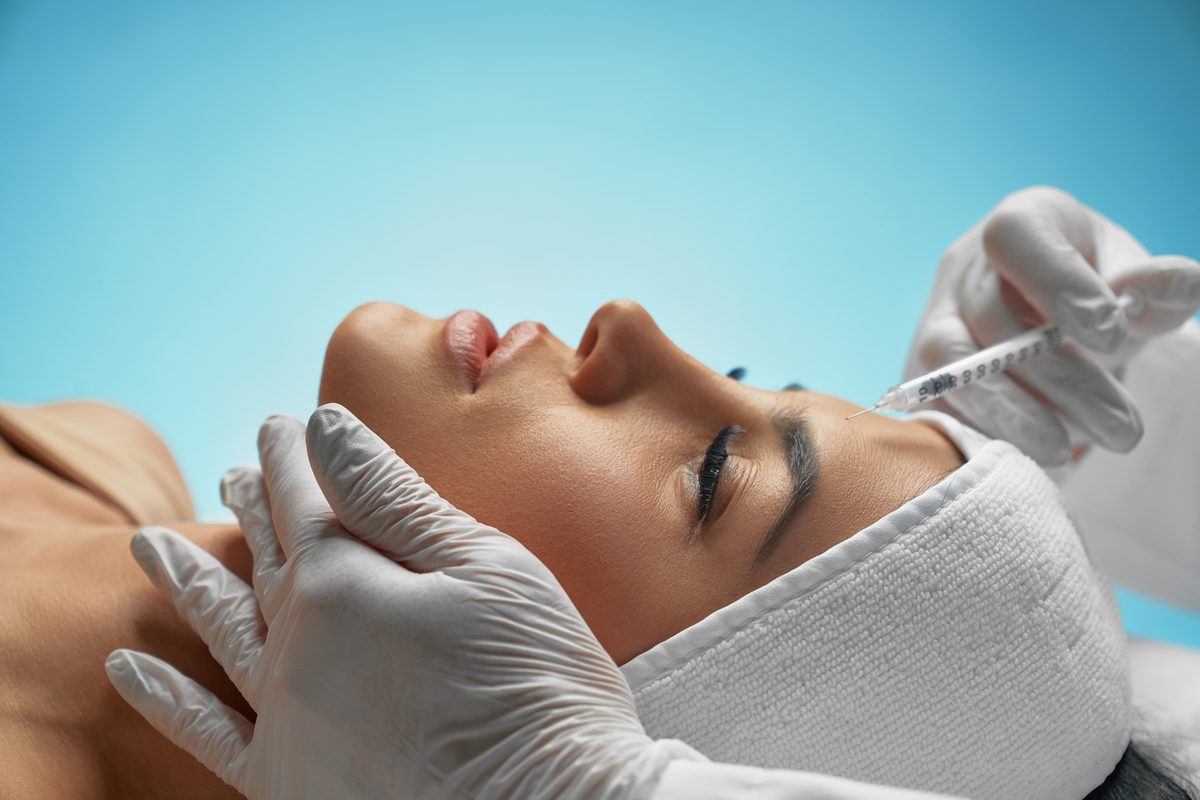
Botox (botulinum toxin type A) is a neuromodulator. It works by temporarily blocking the nerve signal that tells a muscle to contract. When the muscle can't contract, the wrinkle it creates disappears. This is why Botox is effective for dynamic wrinkles — wrinkles that are caused by repeated muscle movement: forehead lines, frown lines (the "11s" between eyebrows), crow's feet, bunny lines on the nose, chin dimpling, neck bands.
What Botox does not do: restore volume, fill a hollow area, lift a sagging cheek, or reduce a static wrinkle — a line that's visible even when the face is completely at rest. Botox injected into a nasolabial fold (the line from nose to mouth) will not soften it significantly, because that fold is caused by volume loss and gravity, not by muscle movement. This is the most common mismatch I see: patients wanting to soften nasolabial folds and asking for Botox.
According to the American Society of Plastic Surgeons, botulinum toxin injections have been the most performed minimally invasive cosmetic procedure in India for four consecutive years. Yet a significant proportion of patients who receive Botox are not ideal candidates for their specific concern. The treatment is only as good as the diagnostic decision that preceded it.
What Dermal Fillers Actually Do
Dermal fillers (most commonly hyaluronic acid fillers like Juvederm or Restylane) add volume beneath the skin surface. They're used to restore what's been lost — facial fat, bone structure, hydration — or to add volume where it was never present in sufficient quantity. Fillers are effective for: nasolabial folds (nose-to-mouth lines), marionette lines (mouth-to-chin lines), hollow cheeks, tear troughs (under-eye hollowing), lip enhancement, jawline definition, and temple hollowing.
What fillers don't do: relax active muscles. If a forehead line is caused by repeated brow movement, filling it will produce an unnatural result — the skin above the filler will still move while the filled area doesn't. For dynamic wrinkles, Botox is the correct tool. Filling them is not only less effective; it's aesthetically wrong.
The Real Answer: Most Good Outcomes Use Both
The aesthetic medicine concept I explain to most patients at ORA is facial ageing as a loss of three things simultaneously: muscle tone (leading to dynamic wrinkles → treat with Botox), facial volume (hollow cheeks, tear troughs, deflated lips → treat with fillers), and skin quality (texture, laxity → treated with lasers, chemical peels, or biostimulators). A face that looks genuinely refreshed — not frozen, not overfilled — typically requires addressing at least two of these, often all three.
I find that patients who have only Botox often notice the movement stopped but still look tired. Patients who have only fillers in the wrong locations look puffy rather than younger. The combination — correctly matched to what's actually causing ageing in that specific face — produces results that look natural rather than "done."
ORA's Assessment Protocol Before Any Injection
- Facial mapping consultation (visit 1): I assess your face at rest and in movement. Static lines (visible when relaxed) → fillers. Dynamic lines (appear with expression) → Botox. Both present → combination plan.
- Volume loss assessment: I check cheek projection, tear trough depth, and jawline definition. These areas respond to fillers and make the biggest visible difference in facial rejuvenation.
- Photography and discussion: I photograph your face in standard positions and we discuss what you'd like to change. I will tell you if what you're asking for won't achieve the result you have in mind — and what will.
- Treatment sequencing: For combination cases, I typically do Botox first (results visible at 7–14 days) and reassess before adding fillers. This avoids over-filling areas that may look different once muscle movement softens.
- Conservative approach: I use the minimum effective dose and volume on the first treatment. It is always easier to add more than to reverse too much.
Hyderabad-Specific Consideration: Why Indian Skin Ages Differently
Fitzpatrick III–V skin (the majority of Hyderabad's population) ages differently from lighter skin types. Darker skin retains elasticity longer — wrinkles develop later. But volume loss (especially in the cheeks and temples) tends to occur at a similar or earlier age. What this means practically: many patients in Hyderabad in their 30s who come in for anti-ageing treatment don't need Botox yet — they need subtle filler volume restoration in the mid-face. The forehead lines that send them to a clinic are often caused by compensatory brow raising due to mid-face volume loss, not by primary forehead muscle overactivity. Treating the cause (mid-face volume) reduces the forehead lines without Botox in many cases. This is a subtlety that matters enormously for natural outcomes on Indian skin.
Why Patients Come to ORA from Gachibowli, HITEC City, and Jubilee Hills
ORA Skin & Hair Clinics at Kondapur is one of the few clinics in Hyderabad where every Botox and filler treatment is performed by Dr. Spandana P (M.D. Dermatology) personally — not delegated to a junior doctor or nurse injector. Patients from Gachibowli, HITEC City, Madhapur, Jubilee Hills, and Banjara Hills come to us because they want an honest clinical assessment before any injection, not a quick 20-minute appointment where the "recommendation" is the same treatment everyone receives. Rated 4.9★ on Google. 👉 ORA anti-ageing treatments →
If You're Comparing Aesthetic Clinics in Hyderabad for Botox or Fillers
- "Who administers the injection — the dermatologist or a technician?" Botox and fillers are medical procedures. In India, they should be administered by a trained dermatologist or plastic surgeon. Ask directly.
- "Will you assess whether Botox or fillers is more appropriate for my concern before recommending?" A clinic that doesn't do a facial assessment before deciding is defaulting to their preferred procedure, not yours.
- "What product brand and units/volume are you using?" You deserve to know. At ORA, we use Allergan Botox (not cheaper unlicensed alternatives) and FDA-approved hyaluronic acid fillers.
At ORA: yes to all three. 👉 Book free anti-ageing consultation → | Up to 25% off first visit
Frequently Asked Questions
How long do Botox results last in Hyderabad's climate?
Botox typically lasts 3–4 months for most patients. Hyderabad's heat (40°C+ in summer) does not meaningfully affect Botox longevity once it's taken effect — the product is not heat-sensitive at body temperature. However, first-time patients and those who exercise intensively often find their first treatment lasts slightly shorter (2.5–3 months); subsequent treatments tend to last the full 3–4 months. I recommend retreatment at the point when movement fully returns, not before.
Will I look frozen or unnatural?
Only if too many units are used or if the wrong muscles are targeted. At ORA, I use a conservative-first approach — treating with the minimum effective dose rather than trying to eliminate all movement. Subtle Botox that softens expression lines while preserving natural movement is the goal. "Frozen" faces are the result of over-treatment or poorly placed injections, not an inherent property of the product. I show patients results from similar cases before they decide.
Can I have Botox and fillers on the same visit?
Yes, for straightforward cases — and often this is the most efficient approach. The exception: for new patients, I prefer to see the Botox result before committing to filler placement in areas where both interact (e.g., brow and temple area). The 7–14 day Botox settling period can inform where and how much filler to add. For patients I know well and who are coming for a scheduled combination refresh, same-day treatment is standard.
ORA Skin & Hair Clinics | 3rd Floor, Avalon Court, Camelot Layout, Botanical Garden Road, Kondapur, Hyderabad 500084 | Mon–Sun 9 AM–8 PM | Rated 4.9★ on Google | Book free consultation → | Up to 25% off first visit
Book Your Free Skin / Hair Analysis
A thorough assessment worth ₹1,500 — completely free. No obligation. No pressure. Just answers. Up to 25% Off on your first visit session.
Dr. Spandana P
Dr. Spandana P holds an MD in Dermatology, Venereology & Leprology and is the lead dermatologist at ORA Skin & Hair Clinics, Kondapur. She specialises in aesthetic dermatology including Botox and dermal fillers for natural, age-appropriate results.
Consult with Experts →Related Articles
FUT vs FUE vs DHI Hair Transplant in Hyderabad — Which Technique Is Right for You?
9 min read
Acne Treatment in Hyderabad: How Humidity, Diet and Indian Skin Affect Your Breakouts
8 min read
Exosome Hair Treatment in Hyderabad: The Science, What to Expect, and Real Results
7 min read