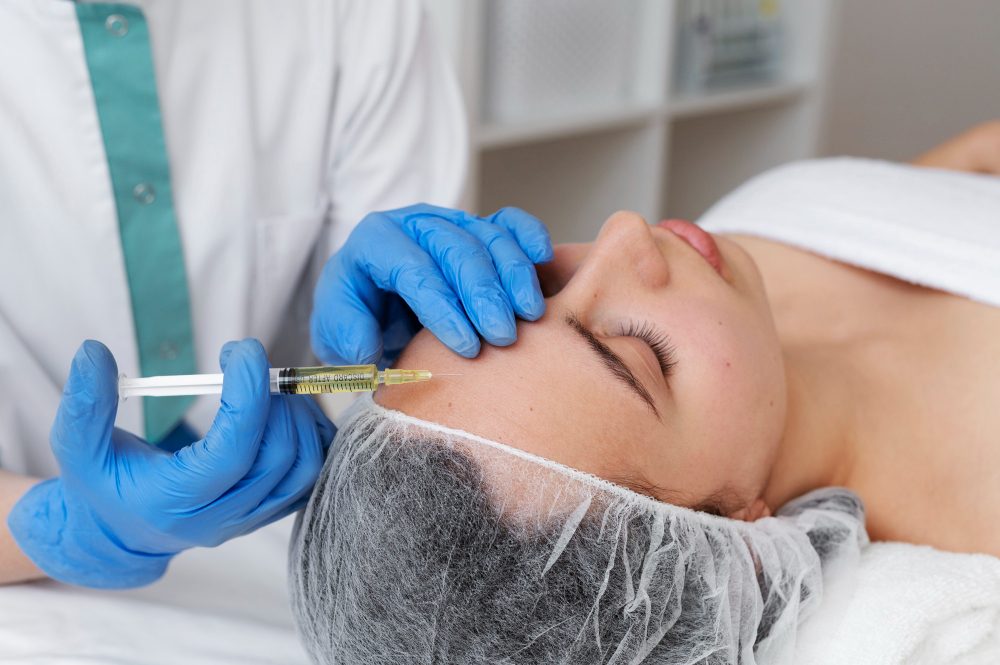
By Dr. Spandana P — M.B.B.S, M.D. Dermatology, Venereology & Leprology | ORA Skin & Hair Clinics, Kondapur | July 2026
Of all the hair treatments we offer at ORA, exosome therapy is the one that generates the most questions — and the most scepticism. Patients have usually heard of PRP or GFC. Exosomes are newer, and the science behind them sounds almost too good to be true: tiny vesicles derived from stem cells that signal dormant follicles to reactivate. I understand the scepticism. So let me tell you what the evidence actually says, what I see in patients who've had it, and — importantly — where it fits relative to GFC, which most patients at our Kondapur clinic have also tried.
What Are Exosomes? (The Actual Science, Not the Marketing)
Exosomes are extracellular vesicles — nano-sized bubbles (30–150 nm) secreted by cells. They function as intercellular messengers, carrying proteins, mRNA, microRNA, and growth factors from one cell to another. The exosomes used in hair treatment are derived from mesenchymal stem cells (MSCs) — typically from placental or adipose tissue, processed in ISO-certified cell culture labs.
What makes MSC-derived exosomes relevant for hair loss: they carry a payload of growth factors including VEGF (vascular endothelial growth factor), KGF (keratinocyte growth factor), and IGF-1 — all of which play roles in follicular anagen initiation. A 2022 study published in the International Journal of Molecular Sciences demonstrated that MSC-derived exosomes significantly promoted hair follicle growth in preclinical models via the Wnt/β-catenin signalling pathway. Human clinical data is still emerging, but the mechanistic rationale is solid.
Important distinction: not all "exosome" products are the same. Plant-derived exosomes (marketed under various brand names) have a completely different composition and mechanism from MSC-derived exosomes. At ORA, we use MSC-derived exosomes from certified labs — not plant-derived products. This distinction matters enormously for clinical outcomes and is almost never mentioned in clinic marketing.
Exosomes vs GFC — They're Not Competing, They're Complementary
This is the question I get most at ORA: "Should I do GFC or exosomes?"
GFC (Growth Factor Concentrate) is derived from your own blood. We process it to extract autologous growth factors — PDGF, EGF, FGF, VEGF — at 5–10× platelet concentration. GFC works through your body's own repair signalling, amplified. It's well-validated, with published response rates of 60–75% reduction in hair fall and measurable density improvement over 4 monthly sessions.
Exosomes work through a different pathway — they introduce signals from outside the body that the follicle's receptor cells respond to differently from autologous signals. Think of GFC as amplifying your body's own repair system. Exosomes are adding a different set of instructions entirely.
In practice at ORA, I use exosomes in three specific situations: early-stage hair loss where we want to start with the most powerful available stimulus; post-GFC course maintenance (exosomes sustain the gains from GFC between annual top-up sessions); and patients where GFC response was partial and we want to layer in a different mechanism. I don't position one as "better" — they're tools with different use-cases.
What to Expect from Exosome Treatment at ORA
- Initial assessment (visit 1): Trichoscopy to classify hair loss type (androgenic alopecia, diffuse thinning, telogen effluvium), stage (Norwood/Ludwig), and determine whether exosomes, GFC, or a combination is appropriate.
- Blood panel: Ferritin, Vitamin D, B12, thyroid. Exosome therapy cannot overcome nutritional deficiencies driving hair loss. We correct these in parallel.
- Session protocol: Scalp cleansing and prep, microneedling (1.5 mm depth over thinning areas to open follicular channels), application of MSC-derived exosome solution, scalp massage for penetration. Session duration: 45–60 minutes. Frequency: 3 sessions spaced 4–6 weeks apart for initial course.
- Response assessment: Trichoscopy comparison at week 12. We photograph and measure follicular density so you see objective change, not just subjective impression.
- Maintenance: One session every 6 months to sustain results, combined with prescribed topical minoxidil if appropriate.
Who Benefits Most from Exosome Hair Treatment
Based on my patient outcomes at ORA, I see the best responses in: early androgenic alopecia (Norwood I–III / Ludwig I–II) where follicles are miniaturised but not dead; diffuse telogen effluvium where large numbers of follicles are in resting phase; and post-GFC patients who want to extend and deepen their results. I see limited benefit in advanced hair loss (Norwood V–VI / Ludwig III) where follicles are permanently inactive — at that stage, hair transplant is the more appropriate conversation.
Why Patients from Gachibowli, HITEC City, and Madhapur Come to ORA for Exosome Therapy
ORA Skin & Hair Clinics at Kondapur is one of the few clinics in Hyderabad that uses MSC-derived exosomes from ISO-certified cell culture labs and combines the treatment with a mandatory trichoscopy assessment before recommending it. We're transparent about what exosomes can and can't do — and about who actually benefits. Patients from Gachibowli, HITEC City, Madhapur, and Miyapur come to us specifically because they want clinical clarity, not a treatment pushed on everyone. Rated 4.9★ on Google. 👉 Compare GFC and exosome therapy at ORA →
If You're Comparing Clinics Offering Exosome Hair Treatment in Hyderabad
- "Are your exosomes MSC-derived or plant-derived?" The science on MSC-derived exosomes is substantially stronger. If a clinic can't answer this, they don't know what they're administering.
- "Do you do a trichoscopy before recommending exosome treatment?" Without assessing your hair loss stage, there's no way to know if you're a good candidate.
- "How do your outcomes compare between GFC and exosomes?" A clinic that only offers one and recommends it universally isn't personalising treatment.
At ORA: yes to all three. 👉 Book free hair loss consultation →
Frequently Asked Questions
How long before I see results from exosome hair treatment?
Most patients notice reduced shedding after the second session (week 6–8). Visible new hair growth typically appears at month 3–4. Objective follicular density improvement, confirmed by trichoscopy, is assessed at month 3. Full results are visible at month 6. This timeline is similar to GFC — both treatments work on biological hair cycles, which can't be rushed.
Is exosome treatment safe? Are there side effects?
MSC-derived exosomes are acellular — they contain no living cells, which eliminates immune rejection risk. The most common side effects are mild scalp redness and tenderness for 24–48 hours after the microneedling component. No systemic side effects have been reported in clinical studies. At ORA, we use only regulatory-compliant exosome products sourced from certified labs.
Can exosome treatment be combined with hair transplant?
Yes — and I often recommend it. Exosome therapy 4–6 weeks before a hair transplant improves the follicular environment and can increase graft survival. Post-transplant exosome sessions (starting at month 3 after the procedure) accelerate the new hair growth cycle. This combination protocol gives transplant patients better density outcomes than transplant alone.
ORA Skin & Hair Clinics | 3rd Floor, Avalon Court, Camelot Layout, Botanical Garden Road, Kondapur, Hyderabad 500084 | Mon–Sun 9 AM–8 PM | Rated 4.9★ on Google | Book free consultation → | Up to 25% off first visit
Book Your Free Skin / Hair Analysis
A thorough assessment worth ₹1,500 — completely free. No obligation. No pressure. Just answers. Up to 25% Off on your first visit session.
Dr. Spandana P
Dr. Spandana P holds an MD in Dermatology, Venereology & Leprology and is the lead dermatologist at ORA Skin & Hair Clinics, Kondapur. She has extensive experience in regenerative hair treatments including GFC, GFC, QR678, and Exosome therapy.
Consult with Experts →Related Articles
FUT vs FUE vs DHI Hair Transplant in Hyderabad — Which Technique Is Right for You?
9 min read

Monsoon Hair Fall in Hyderabad — Why It Spikes in July and How to Stop It
7 min read

Dandruff Treatment in Hyderabad — What Actually Works, According to a Dermatologist
8 min read