
By Dr. Spandana P — M.D. Dermatology, Venereology & Leprology | ORA Skin & Hair Clinics, Kondapur | July 2026
Every July, my trichology schedule at Kondapur fills up faster than any other month of the year. Clients walk in with pillow photos, palm-full counts, 200-strand drain screenshots. Most have already tried a serum. Most are panicking unnecessarily — but some aren't, and the difference matters.
Here's what I've found after treating monsoon hair fall in Hyderabad for years: it is almost never one cause. It's a combination of four factors that compound each other — and most people (and most clinics) treat only one of them. That's why the hair fall keeps coming back.
What Makes Hyderabad Monsoon Hair Fall Different
Monsoon hair fall in Hyderabad is not the same as general seasonal shedding. Our city creates a specific combination that I don't see described anywhere accurately:
- 40–44°C heat from April to June primes follicles for mass-shedding in July
- Borewell water in most of Kondapur, Gachibowli, and Madhapur runs at TDS 500–900 ppm — among the highest in any major Indian city
- August humidity regularly crosses 85%, creating the exact environment Malassezia yeast thrives in
- IT professionals commuting between air-conditioned offices and outdoor heat cycle their scalps through temperature extremes 2–4 times a day — a stress pattern unique to Hyderabad's work culture
Understanding this combination is what separates a correct treatment plan from a guess.
The 4 Causes — And Why You Need to Treat All Four
1. Telogen Effluvium: The Delayed Shedding Response
Telogen effluvium (TE) is a temporary but heavy shed that happens 6–12 weeks after a physiological stress. Hyderabad's summer heat is that stress — it pushes more follicles than normal into the resting (telogen) phase simultaneously. When monsoon arrives in July, they all shed at once. This is not the same as male pattern baldness or genetic thinning. TE produces diffuse, all-over shedding, not a receding hairline. And — this is the important part — it is reversible if you treat the root cause.
The tell: if your hair fall started in July after a hot summer, and it's happening all over the scalp (not just the crown or temples), you're most likely dealing with TE. A trichoscopy reading at ORA takes 5 minutes and confirms this before we recommend anything.
2. Borewell Water — The Hyderabad-Specific Problem Nobody Talks About
Most hair fall advice online was written for people on municipal water. If you're in a building that uses borewell water in Kondapur, Gachibowli, Manikonda, or Miyapur, the rules are different. High-TDS water (500+ ppm) leaves calcium and magnesium deposits on the scalp and hair shaft — raising scalp pH, stripping the natural sebum layer, and creating friction damage at the root. I've had patients whose hair fall reduced by 40% simply by installing a shower filter, before any clinic treatment. That's how significant the water factor is here.
How to check: buy a ₹200 TDS meter from Amazon. If your tap reads above 400 ppm, the water is part of your problem.
3. Scalp Fungal Infection: The Trigger Behind the Shedding
Malassezia furfur — the yeast behind dandruff and seborrheic dermatitis — grows aggressively in Hyderabad's August humidity. Scalp inflammation from this yeast disrupts the follicular environment and causes diffuse shedding that looks identical to TE but doesn't respond to the same treatment.
The tell: if your hair fall comes with itching, white or yellow flaking, or an oily scalp despite regular washing, there's a fungal component. Treating TE without treating the fungal infection first is like painting over mold — it comes back. We always check for and treat this before starting any growth-stimulation protocol.
4. Nutritional Gaps That Build Up Over Summer
This is the most underdiagnosed factor and the cheapest to fix. At ORA, we run blood panels on virtually every hair fall patient who walks in — and what we consistently find in July–August: ferritin below 30 ng/mL (the threshold the International Journal of Dermatology identifies as necessary for healthy hair growth), Vitamin D below 20 ng/mL, and frequently low B12. These don't cause hair fall by themselves, but they are the fuel that turns a manageable seasonal shed into a prolonged, severe one. If your ferritin is at 12, GFC will work at 60% of its potential. Fix the ferritin first.
The Mistake Most Patients Make
Spending ₹3,000–5,000 on a hair serum before getting a ₹400 blood test. I see this every week. The serum sits on a follicle that is nutritionally starving and inflamed from fungal infection. It does nothing. The ₹400 blood test tells you exactly what's wrong and what to do about it.
The second mistake: oiling the scalp during active dandruff. Every monsoon blog tells you to oil your hair. For roughly 40% of people with active Malassezia overgrowth, coconut oil makes things worse — it feeds the yeast. If you have flaking and you're oiling, stop oiling until the scalp is clear.
How ORA Diagnoses and Treats Monsoon Hair Fall
We don't recommend a procedure on the first visit. Here's our actual protocol:
- Trichoscopy (visit 1): Dermoscopic assessment of follicular density, hair phase ratio (anagen:telogen), miniaturisation, scalp inflammation, and fungal signs. This takes 10–15 minutes and tells us precisely what type of hair fall you have.
- Blood panel (before session 1): CBC, serum ferritin, Vitamin D (25-OH), B12, TSH, fasting blood glucose. We read the results before prescribing anything.
- Scalp treatment first: If there's active seborrheic dermatitis, we treat the scalp with medicated shampoos and anti-inflammatory protocols before starting any stimulation treatment. Stimulating an inflamed follicle is counterproductive.
- GFC or mesotherapy (once the scalp is stable): Growth Factor Concentrate uses your own blood, processed to extract PDGF, EGF, FGF, and VEGF at concentrations 5–10× higher than standard PRP. A course of 4 monthly sessions. We start GFC in August specifically because the stimulated growth cycle becomes visible in October–November — ideal timing.
- Nutritional correction in parallel: Prescribed oral iron, Vitamin D, or B12 supplements based on your blood results. This runs alongside the procedure sessions, not after.
Why Patients Come to ORA from Across Hyderabad
ORA Skin & Hair Clinics at Kondapur is one of the few clinics in Hyderabad's western corridor — covering Gachibowli, Madhapur, HITEC City, Manikonda, and Nanakramguda — that treats all four causes of monsoon hair fall in a single coordinated protocol. We don't recommend a procedure before we know your blood results. We don't treat the scalp and ignore the nutrition. We don't start GFC on an inflamed scalp.
Every hair fall consultation at ORA is conducted by Dr. Spandana P (M.B.B.S, M.D. Dermatology, Venereology & Leprology) personally — not by a technician or a consultant who follows a script. That's a meaningful difference when you're trying to understand why your hair is falling and what will actually stop it.
We're rated 4.9★ on Google by clients across Hyderabad. Most of those reviews mention the same thing: they came after trying other clinics, and they got an actual diagnosis here instead of a procedure recommendation. 👉 Read about GFC at ORA →
If You're Comparing Clinics in Hyderabad for Hair Fall Treatment
Ask every clinic you're considering these four questions before you book:
- Do you do a trichoscopy before recommending GFC or PRP?
- Do you check ferritin and Vitamin D before the first session?
- Do you check for and treat scalp infections separately?
- Is the procedure performed by a dermatologist or a technician?
At ORA: yes to all four. These are not extras — they are the baseline for a correct hair fall treatment plan. If a clinic can't answer yes to all four, you're paying for a procedure, not a treatment.
What to Do at Home Right Now
- Test your water TDS (₹200 meter). If above 400 ppm, install a KDF shower filter. This is the single best ₹1,500 you'll spend on your hair this monsoon.
- Wash 3× per week with a pH-balanced (4.5–5.5), sulphate-free shampoo. Not less — sweat and sebum buildup in humidity worsens both dandruff and follicular stress.
- Dry completely before sleeping. Wet scalp at night in 80%+ humidity is a Malassezia breeding ground.
- Stop oiling if you have active dandruff — it feeds the yeast. Oil after the scalp is clear.
- Book a blood test. Ask for: CBC, serum ferritin, Vitamin D (25-OH), B12, TSH. This costs ₹400–700 at most diagnostic labs. It will tell you more than any serum.
👉 Hair fall treatment at ORA — full overview →
Frequently Asked Questions
How do I know if my hair fall is monsoon-related or something more serious?
Monsoon-related telogen effluvium is diffuse (all-over scalp, not patterned), it starts in July–August, and the shed hairs have a small white bulb at the root (telogen hairs). Androgenic alopecia thins at the crown and temples specifically, and doesn't follow a seasonal pattern. Alopecia areata creates round patchy bald spots. If you're unsure, a trichoscopy gives you the answer in 10 minutes — no blood draw required. Come in and we'll tell you exactly what you're dealing with.
Does GFC work for monsoon hair fall, or only for genetic hair loss?
GFC works well for both — but the mechanism is different. For monsoon-related TE, GFC accelerates the recovery of follicles that were stress-pushed into the telogen phase. For genetic hair loss (androgenic alopecia), GFC slows miniaturisation and stimulates growth in follicles that are still viable. In both cases, GFC needs to be combined with whatever is driving the hair fall — nutritional correction for TE, DHT-blocking treatment for genetic hair loss. GFC alone without addressing the root cause is not our protocol.
How quickly will I see results with GFC?
Most patients notice reduced shedding after session 2 (month 2). Visible new growth typically appears by month 3–4. Full density improvement is assessed at month 6. We photograph and trichoscopy-scan at the beginning and end of the course so you can see the actual follicular change, not just subjective impression.
I've been to another clinic and the hair fall came back. What's different at ORA?
The most common reason GFC or PRP results don't last: the underlying cause was never addressed. If your ferritin is chronically low and the clinic didn't correct it, the growth factor treatment works temporarily and then the hair falls again. We see this regularly. Our protocol is: diagnose first, treat the cause in parallel with the procedure, and monitor with follow-up trichoscopy. That's what produces lasting results, not just a temporary response.
Can I come from Gachibowli or HITEC City to ORA Kondapur?
Our clinic is at Avalon Court, Botanical Garden Road, Kondapur — typically 8–12 minutes from Gachibowli, 10–15 minutes from HITEC City and Madhapur, and 15–20 minutes from Jubilee Hills and Banjara Hills. We're open Monday to Sunday, 9 AM to 8 AM. Free consultation and 40% off your first treatment for new clients. Book online →
ORA Skin & Hair Clinics | 3rd Floor, Avalon Court, Camelot Layout, Botanical Garden Road, Kondapur, Hyderabad 500084 | Rated 4.9★ on Google
Book Your Free Skin / Hair Analysis
A thorough assessment worth ₹1,500 — completely free. No obligation. No pressure. Just answers. Up to 40% Off on your first visit session.
Dr. Spandana P
Dr. Spandana P is a board-certified dermatologist (M.B.B.S, M.D. DVL) at ORA Skin & Hair Clinics, Kondapur. She specialises in trichology, melasma, and advanced laser treatments for Indian skin.
Consult with Experts →Related Articles
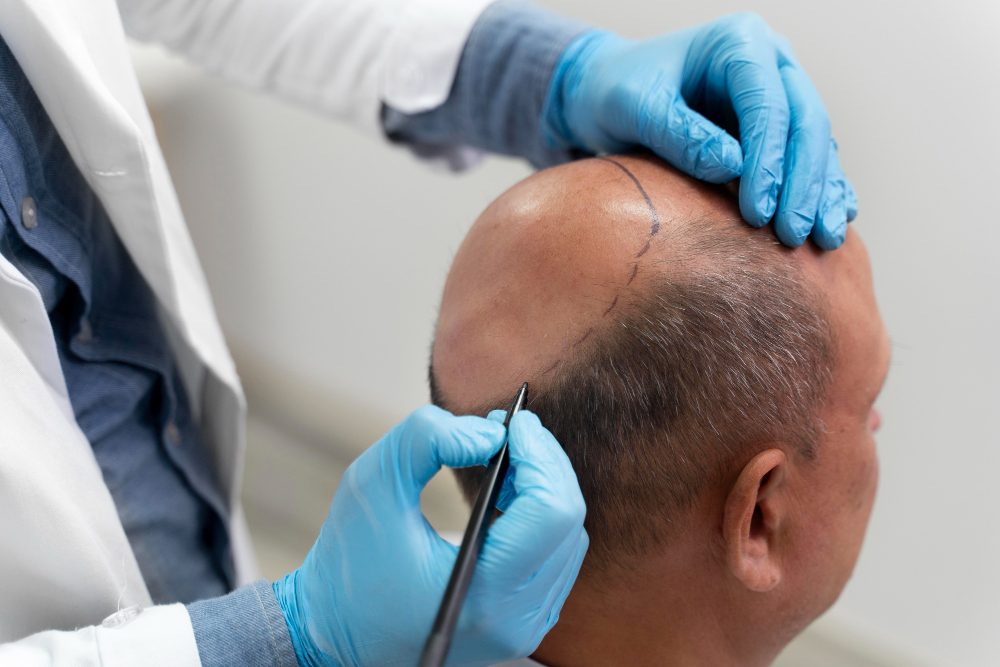
FUT vs FUE vs DHI Hair Transplant in Hyderabad — Which Technique Is Right for You?
9 min read
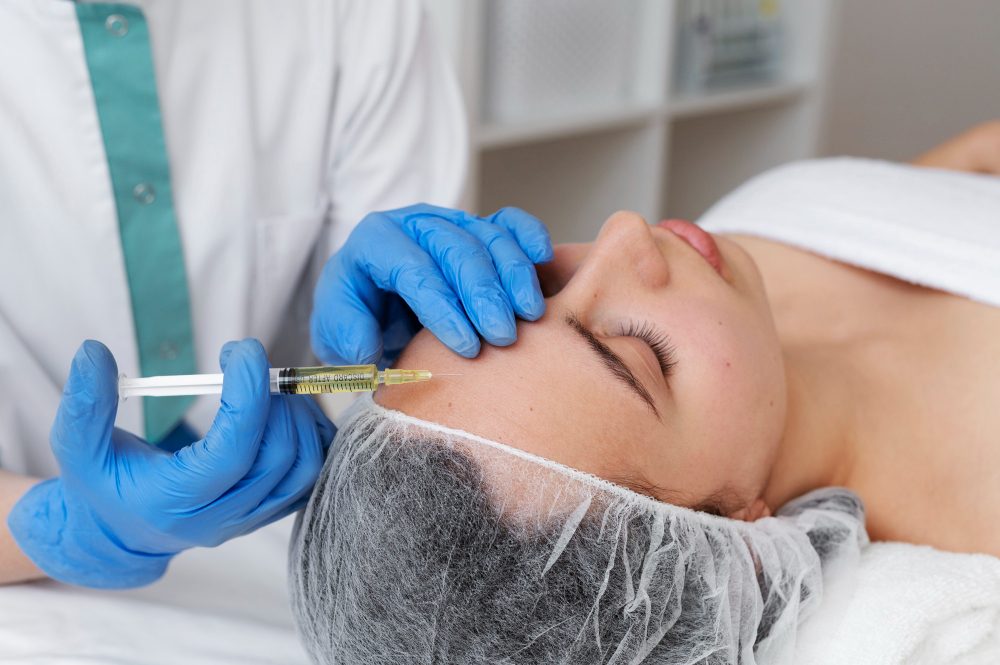
Exosome Hair Treatment in Hyderabad: The Science, What to Expect, and Real Results
7 min read

Dandruff Treatment in Hyderabad — What Actually Works, According to a Dermatologist
8 min read