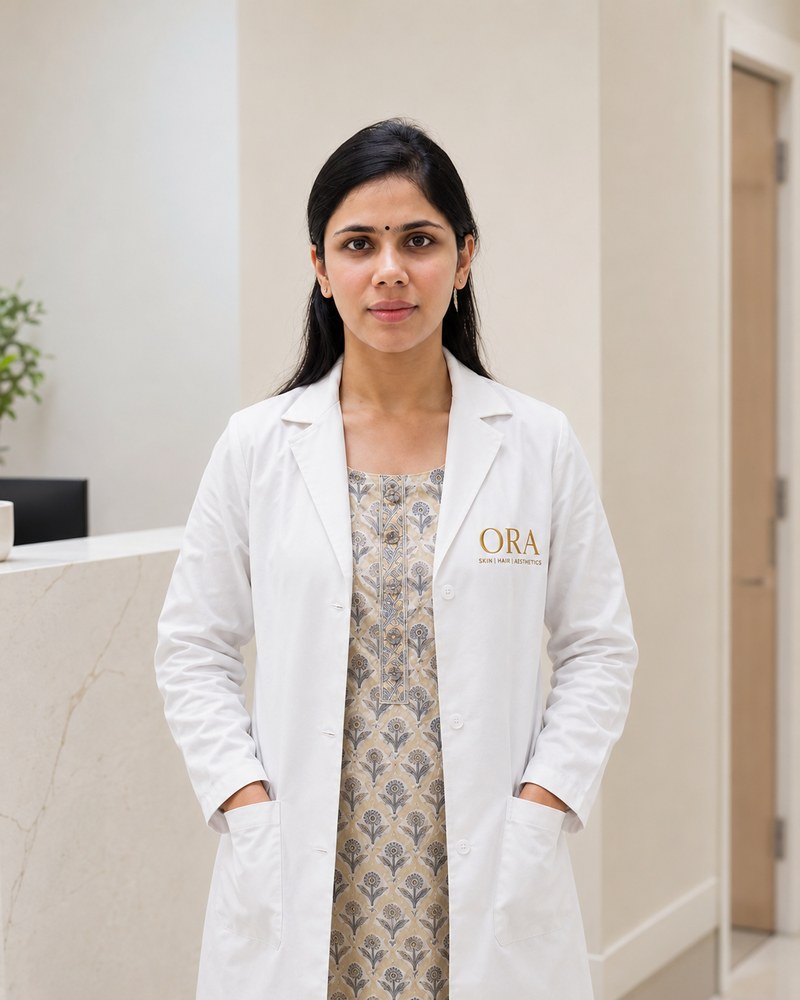
Hair loss is the most emotionally distressing skin and hair condition I treat at ORA. Unlike men, whose hair loss pattern is usually predictable, women's hair loss is more diffuse, harder to see in early stages, and almost always has an underlying cause that can be identified and treated. The worst thing a patient can do is start treatment without a diagnosis.
The 6 Most Common Causes of Hair Loss in Women in Hyderabad
1. Telogen Effluvium (TE)
The most common cause I see. TE happens when a large proportion of hair follicles simultaneously enter the resting (telogen) phase and shed 2–4 months later. Triggers include: significant illness or infection (including COVID-19), crash dieting or caloric restriction, iron-deficiency anaemia (extremely common in Indian women — studies show 50–60% of reproductive-age Indian women are iron deficient), crash dieting, major surgery, or childbirth (postpartum TE typically peaks at 3–4 months post-delivery).
Treatment: Address the trigger first. Supplement iron, B12, vitamin D, biotin if deficient. GFC sessions at ORA to stimulate follicle recovery. Most cases of TE resolve within 6–12 months once the trigger is addressed.
2. Female Pattern Hair Loss (FPHL / Androgenetic Alopecia)
FPHL presents as gradual widening of the central part with preservation of the frontal hairline — unlike male pattern baldness. It affects ~30% of Indian women by age 50, according to data from the International Journal of Trichology. FPHL is genetic and hormonal, but can be managed effectively with combination treatment.
At ORA: Topical minoxidil 2–5% (the only FDA-approved topical for female hair loss), GFC sessions monthly for 4 months, and oral anti-androgens (spironolactone or finasteride in appropriate cases) where hormonal contribution is confirmed.
3. PCOS-Related Hair Loss
Polycystic Ovary Syndrome affects 20–25% of Indian women of reproductive age. Elevated androgens in PCOS cause follicle miniaturisation — the same mechanism as male pattern baldness. The hair loss pattern is similar to FPHL. The key: treating the PCOS (hormonal management, diet, lifestyle) alongside hair-specific treatments at ORA is necessary for sustained results.
4. Thyroid-Related Hair Loss
Both hypothyroidism and hyperthyroidism can cause diffuse hair loss. Thyroid-related hair loss tends to be diffuse — even eyebrows can thin. A simple TSH blood test diagnoses this. At ORA, we include thyroid panel in our standard hair loss blood work.
5. Alopecia Areata
An autoimmune condition where the immune system attacks hair follicles, causing round bald patches. Can be patchy or progress to complete scalp or body hair loss. Responds to intralesional corticosteroid injections and newer treatments at ORA.
6. Traction Alopecia
Caused by tight hairstyles — high buns, tight braids, extensions. Common in professional women who tie hair tightly daily. Can become permanent if left untreated for years. ORA sees this regularly among HITEC City professionals in high-demand work environments.
ORA's Hair Loss Diagnosis Protocol
- Trichoscopy (dermoscopy of scalp) — visualises follicle density, miniaturisation, inflammation under 10–20x magnification. Done at ORA at every consultation.
- Pull test — grasps 40–60 hairs and pulls. More than 6 hairs pulled = active shedding.
- Blood tests — CBC, serum ferritin (iron stores), TSH, vitamin D3, B12, DHEA-S, testosterone, LH/FSH ratio (for PCOS workup).
- Diagnosis — Dr. Spandana P reviews all findings and classifies hair loss type before recommending any treatment.
Why Patients from Hyderabad Come to ORA for Hair Loss
We regularly see patients from Gachibowli, Madhapur, HITEC City, Manikonda, Miyapur, and Jubilee Hills. The most common feedback: "I was prescribed the same shampoo everywhere. ORA did blood tests and found I was severely iron deficient." Iron deficiency is the most missed diagnosis in female hair loss in India — and one of the easiest to treat. At ORA Kondapur, we include full blood work in every hair loss consultation. Rated 4.9★ on Google by 500+ patients.
Frequently Asked Questions
The most common causes of hair loss in women in Hyderabad are: telogen effluvium (triggered by nutritional deficiency, stress, illness, or postpartum hormonal changes), androgenetic alopecia (female pattern hair loss), PCOS-related hormonal hair loss, iron-deficiency anaemia (very common in Indian women), thyroid dysfunction, and alopecia areata. Hyderabad's hard water (high TDS) can worsen scalp conditions but is rarely the primary cause of significant hair loss.
See a dermatologist if: you are losing more than 100–150 strands per day consistently (normal is 50–100), you notice widening of the part line, visible scalp through hair, bald patches, or hair breaking rather than falling from root. A trichoscopy examination (scalp dermoscopy) at ORA reveals miniaturisation, follicle count, and inflammation patterns that determine the cause — which is essential before any treatment.
It depends on the cause. Telogen effluvium caused by nutritional deficiency is treated with supplementation + GFC sessions. PCOS-related hair loss needs hormonal management plus GFC. Female androgenetic alopecia (FPHL) responds to topical minoxidil + GFC + oral medications like spironolactone (if appropriate). At ORA Kondapur, Dr. Spandana P does blood tests + trichoscopy before recommending any treatment — treating hair loss without diagnosis is the most common reason treatments fail.
Hyderabad's tap water has TDS levels of 400–900 ppm — well above the WHO guideline of 300 ppm. Hard water can cause scalp dryness, increase hair breakage, and worsen existing scalp conditions like dandruff or seborrheic dermatitis. However, hard water alone does not cause significant hair fall from the root. If you are losing hair strands with the root bulb intact, the cause is systemic (hormonal, nutritional, or autoimmune) — not water quality.
Next Steps at ORA Skin & Hair Clinics, Kondapur
References
Journal of Cutaneous and Aesthetic Surgery — Dermatology protocols for Indian skin (2023) DermNet NZ — Dermatology clinical reference