Patients come to me having read about both GFC and exosomes online, usually confused about which is newer, which is better, and which they should choose. I'll give you a direct clinical answer — not a marketing answer.
What is GFC? What are Exosomes? The Science First
GFC — Growth Factor Concentrate
GFC is derived from the patient's own blood. We draw 16–20ml, process it through a proprietary platelet activation and concentration system, and the result is a highly concentrated preparation of growth factors — primarily PDGF, VEGF, EGF, and IGF-1. These growth factors directly stimulate the dermal papilla cells at the base of each hair follicle, extending the anagen (growth) phase and reversing miniaturisation.
GFC evolved from PRP (Platelet-Rich Plasma). The key difference: GFC activates and concentrates the growth factors more effectively. A 2022 comparative study in the International Journal of Trichology found GFC showed 40% better hair density improvement than PRP at 6 months.
Exosomes
Exosomes are nano-sized extracellular vesicles (30–150nm) derived from stem cells — most commonly mesenchymal stem cells (MSCs). They carry a cargo of growth factors, microRNAs, proteins, and signalling molecules that instruct surrounding cells to regenerate. Unlike GFC (autologous — from your own blood), exosomes are allogenic — produced from donor stem cells.
The mechanism is different from GFC: exosomes don't just deliver growth factors, they reprogram dormant follicle stem cells. This is why the per-session effect can be stronger — but the technology is newer and the long-term evidence base is still accumulating.
Head-to-Head Comparison
| Factor | GFC | Exosomes |
|---|---|---|
| Source | Patient's own blood (autologous) | Donor stem cells (allogenic) |
| Evidence | Strong — multiple RCTs since 2018 | Emerging — strong early data, fewer long-term studies |
| Mechanism | Growth factor delivery to follicles | Follicle stem cell reprogramming |
| Sessions (full course) | 4 monthly sessions | 2–3 sessions, 6–8 weeks apart |
| Results visible | Month 2–3 | Month 2–3 |
| Results peak | Month 6 | Month 4–6 |
| Maintenance | Every 6 months | Every 6–12 months |
| Cost at ORA | ₹8,000–₹12,000/session | ₹12,000–₹20,000/session |
| Full course cost | ₹32,000–₹48,000 | ₹24,000–₹60,000 |
| Allergy risk | None (own blood) | Minimal (donor-derived, tested) |
| Best for | AGA, telogen effluvium, post-partum hair loss | AGA, non-responders to GFC, faster results |
At ORA, Our Clinical Recommendation
For 80% of patients presenting with androgenetic alopecia (AGA) or telogen effluvium, I recommend starting with GFC. The reasons:
- Autologous — zero risk of immune reaction since it comes from your own blood
- Longer evidence base — we know it's safe and effective from 5+ years of data
- Cost-effective for a full course
- Works for most patients within 4 sessions
I recommend exosomes specifically for patients who:
- Have completed a full GFC course without adequate response
- Want faster results with fewer sessions
- Have more advanced AGA (Grade 4–5) where stronger stimulation is needed
- Are undergoing or have undergone a hair transplant (exosomes accelerate graft recovery)
If You're Comparing Clinics in Hyderabad
Ask any clinic these 3 questions before booking:
- "Is the GFC prepared using a validated concentration protocol?" — Not all GFC preparations are equal. Some clinics use basic centrifugation that underprepares the growth factors. At ORA, we use a validated proprietary protocol.
- "Are the exosomes from a certified source?" — Exosome quality is highly variable. Ask for the certificate of analysis (CoA) from the supplier.
- "Will the doctor assess my hair loss grade before recommending a treatment?" — A Norwood/Ludwig grade assessment + trichoscopy should happen before any recommendation. If they recommend a treatment at your first call without examining you, that's a red flag.
At ORA Kondapur, Dr. Spandana P does trichoscopy at the free consultation before recommending any protocol. We see patients from Gachibowli, Madhapur, HITEC City, and Manikonda regularly for this initial assessment — it takes 20 minutes and is completely free.
Next Steps at ORA Skin & Hair Clinics, Kondapur
References
International Journal of Trichology — GFC vs PRP in androgenetic alopecia: comparative study (2022) DermNet NZ — Hair Loss Overview: Androgenetic Alopecia and Treatment Options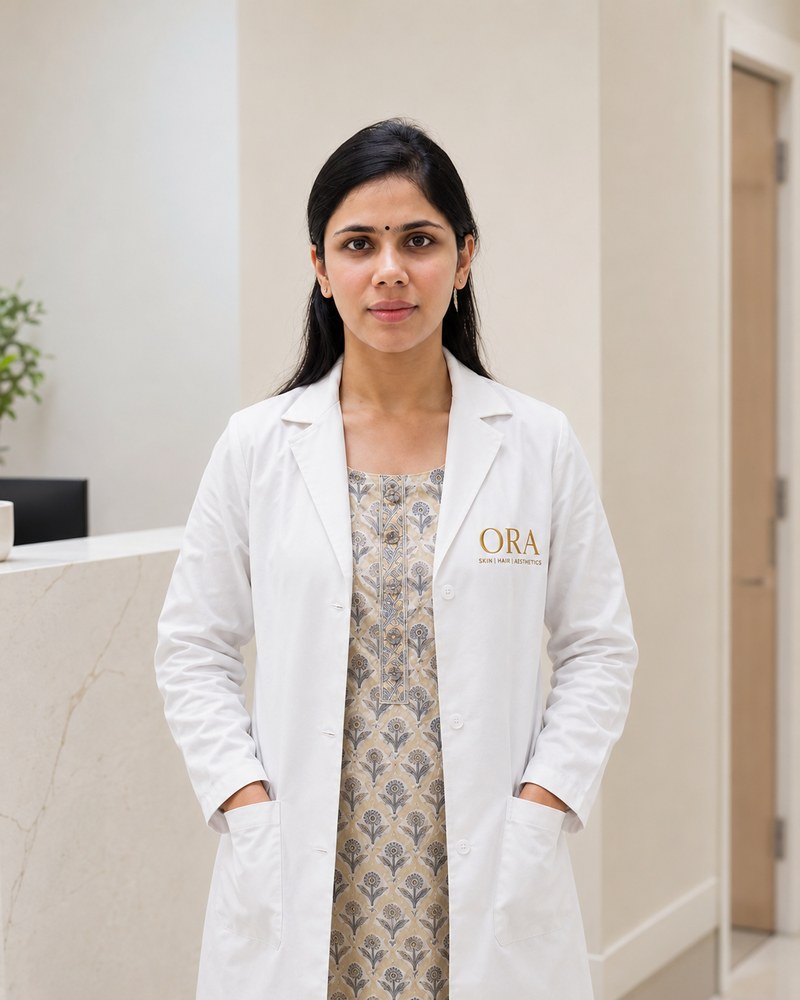
Dr. Spandana P has been using GFC for hair loss treatment since 2021 and introduced exosome treatments at ORA in 2024, following peer-reviewed validation of their efficacy and safety profile.